
USS Buck DD-761
The USS Buck (DD-761) was a remarkable destroyer in the United States Navy, built during a time of major naval growth and tech leaps. Her keel was laid down on May 1, 1944, at the Bethlehem Steel Company’s shipyard in San Francisco, California. She was launched on March 11, 1945, and officially commissioned on June 28, 1946. This ship was part of a larger push to keep the US Navy at the cutting edge after World War II, ensuring the fleet stayed ready and advanced.
Named after Rear Admiral James Buck, a Civil War hero known for his courage and leadership, especially at the Battle of Mobile Bay, the USS Buck carried on the Navy's tradition of honoring its heroes. Naming a ship after such a respected figure was a way to keep his legacy alive.
The USS Buck was packed with impressive firepower and design features for its time. She had six 5-inch/38 caliber guns, twelve 40 mm anti-aircraft guns, and eleven 20 mm anti-aircraft cannons, making her a strong opponent against both surface and air threats. She also had ten 21-inch torpedo tubes and depth charge projectors, boosting her anti-submarine warfare abilities. Her advanced radar and sonar systems were crucial for navigation and combat.
The USS Buck's legacy is highlighted by her active service during the Korean and Vietnam Wars. In Korea, she provided vital naval gunfire support, took part in blockades, and conducted anti-submarine patrols. Her performance showed just how versatile and effective destroyers could be in modern warfare. Her service record proves the lasting value of well-designed, well-armed ships in keeping the seas secure and supporting ground troops.
As part of the Allen M. Sumner-class destroyers, the USS Buck was designed to replace the older Fletcher-class. The Sumner-class had more firepower, better anti-aircraft defenses, and improved survivability. The USS Buck and her sister ships were built to screen fleets, fight submarines, and support shore bombardments. These destroyers were key to the Navy's strategy of having a balanced, flexible fleet ready for any threat.
The commissioning of the USS Buck on June 28, 1946, was the start of a distinguished career that lasted decades. The ceremony was a big deal, with naval dignitaries, shipyard workers, and crew families all in attendance. It marked the ship's transition from a construction project to a vital part of the Navy. Throughout her service, the USS Buck showed resilience, adaptability, and strength, leaving a lasting mark on Navy history.

USS Buck DD-761: Structure, Technology, Armament, and Weaponry
The USS Buck (DD-761) was a Gearing-class destroyer, a class celebrated for its sturdy design and adaptability during the mid-20th century. At 390 feet long and 41 feet wide, it was a solid platform for various naval operations. Built with high-tensile steel, the hull was tough enough to handle combat's demands. The superstructure housed advanced radar and communication systems, allowing the Buck to coordinate effectively with other ships and command units. Its layout included multiple compartments and watertight doors, boosting its chances of survival if damaged.
The USS Buck was packed with cutting-edge technology for its time. It had advanced radar and sonar systems, crucial for spotting enemy submarines and surface ships. The AN/SPS-6 air search radar and AN/SQS-4 sonar were key assets, giving the Buck superior situational awareness. It also had electronic warfare capabilities, like radar jamming and deception systems, essential for countering enemy threats. These technologies enabled the Buck to take on various missions, from anti-submarine warfare to surface combat and air defense.
When it came to armament, the USS Buck was well-equipped for its role as a multi-mission destroyer. It had six 5-inch/38 caliber dual-purpose guns in three twin turrets, capable of engaging both surface and air targets. This gave the ship a versatile and powerful offensive capability. For close-in air defense, it featured twelve 40mm Bofors anti-aircraft guns and eleven 20mm Oerlikon cannons. These weapons were strategically placed to create overlapping fields of fire, ensuring comprehensive coverage against aerial threats.
The Buck's weaponry also included advanced anti-submarine warfare (ASW) capabilities. It was equipped with two depth charge racks and six depth charge projectors for targeting enemy submarines. Additionally, the Buck carried a Hedgehog anti-submarine mortar, a forward-throwing weapon that launched a pattern of explosive charges to increase the likelihood of hitting a submerged target. This combination of ASW weapons, along with its sonar systems, made the Buck a formidable adversary against underwater threats. This comprehensive suite of armament and weaponry ensured the Buck could effectively engage a wide range of enemy forces, making it a critical asset in the US Navy's fleet.

Crew Accounts of Time Aboard
The USS Buck (DD-761) holds a treasure trove of memories for its former crew members, who served aboard the ship during various periods from the 1950s through the early 1970s. These recollections paint a vivid picture of life aboard the "tin can," as destroyers are affectionately known, and highlight the camaraderie, challenges, and unique experiences that defined their naval service.
**Dwayne Bradshaw** recalls his father's pride in the USS Buck, particularly the harrowing experiences of navigating through typhoons and the risky practice of drinking strained torpedo juice. **Kenneth Edmondson** served as a BMSN in 1969, fondly remembering his roles as a bow hook motor whale boat operator and a GM 53 pointer during the Westpac cruises of 1969 and 1970. **Sterling Leist**, a ship's storekeeper in 1968, reminisces about the ship's singing group, the Balladeers, and their concert at Queensland University in Brisbane, Australia.
**Roger Obershaw**, who served as a CS2 in 1968, recalls the nightly replenishments, refueling, and rearming missions during the Westpac tour, as well as the ship's operations in the I-Corps area of Vietnam. **Dale Pope**, a FN in 1972, humorously remembers the incident when a life raft was dropped on the Brazilian captain's new truck during the cross-decking to the Brazilian Navy. **Winston Ramirez**, a CS3 in 1964, cherishes the wonderful times aboard the Buck, especially during the Westpac cruises.
**John Reaksecker**, an IC3 in 1961, encourages former shipmates to join the ship association and attend reunions. **Robert Weeks**, a TM3 in 1961, vividly recalls the experience of going through Typhoon Alice and is on the lookout for a 1961 cruise book. **Lee Cuzick**, a BTFN in 1972, reflects on the best duty ever with the best bunch of guys, expressing a wish to reconnect with his brothers-in-arms.
**Daniel Dahl**, a HM3 in 1951, maintains contact with many friends from his time on the Buck, describing it as the best duty of his naval service. **John Donnini**, a leading SN and HM striker in 1968, seeks information about the ship's anchoring up the river from Vung Tau for Agent Orange claims. **Keven Haller**, a MM3 in 1968, also looks to reconnect with shipmates who can verify the Buck's presence upriver in Vietnam.
**Tony Harman**, a STG3 in 1967, is searching for a good friend from his time in Washington, D.C. **Richard Hill**, a BT2 in 1967, recounts the hard and hot work in the after fireroom, yet fondly remembers being a "Buckaneer." **Wilbert Joseph**, a SH-2 in 1968, provides detailed information about the ship's log and significant events, including a collision at sea and a PTSD incident.
**Marcelo Lamberti**, who served as a first lieutenant in 1991, shares that the ship was renamed Alagoas D-36 and highlights the crew's skill in helicopter operations. **Robert Landry**, a SF2 in 1969, credits the Buck with shaping his future, leading him to medical school and a return to the Navy as a medical officer. **Doug Loebl**, a BT3 in 1964, describes the ship's crazy crew, numerous collisions, and typhoons, as well as close gunfire support missions.
**John McEvoy**, a BMSN in 1950, invites anyone who remembers his father, Jack McEvoy, to get in touch. **Roger Obershaw** again shares memories of the Westpac tour, including storms and 47-degree rolls. **Glenn Pursifull**, a MM3 in 1968, discusses his denied Agent Orange claim and the need for shipmates to group together for support.
**Harold Vaughn**, an ETN3 in 1962, recalls taking the ship out of Fram II and the camaraderie of the "ET Gang." **Don West**, a PN3 in 1969, reflects on the hard and good times aboard the Buck, which transformed him from a boy into a man. **Jim Mudge**, who served in 1966, cherishes memories of shore leaves in exotic places during the Vietnam War.
**Gary Nelson**, who served from 1956 to 1958, and **Ronald Shepherd**, who served from 1959 to 1962, both express a desire to reconnect with former shipmates. **Terry Mason**, who served in 1973, reminisces about the great duty and the decommissioning of the Buck just before a planned Westpac cruise. **Ron Niccum**, who served in 1963, highlights his role as a precision helmsman and assistant to the navigator.
**Harold Fair**, who served from 1958 to 1960, fondly remembers the ship's country band and the close-knit crew. **Jimmy Johnson**, who served from 1956 to 1958, recalls two Westpac cruises and his subsequent transfer to another ship. **Jack Bishop** recounts the Tokin Gulf cruise of 1968-69, a boiler explosion, and the ship's smooth sailing post-repairs.
**Mariela** expresses relief that the ship found a good home after a troubled history. **Mark Coleman**, a seaman boatswain's mate in 1969, seeks information about a typhoon that caused significant damage to the ship. **Mike** and **Mike H** both offer cruise books from 1957 and seek contacts for a ship association.
**Rogelio Reyna**, a BM from late 1967 to 1968, shares his career path post-service and his current role as a VFW Chaplain. **Simon Mims** reflects on his wild days aboard the Buck, his subsequent squared-away service, and his current battle with Agent Orange-related health issues.
These collective memories from the crew of the USS Buck (DD-761) offer a rich tapestry of naval life, marked by adventure, hardship, and enduring friendships.

USS Buck DD-761: Upgrades, Mission Capabilities, and Contribution to the Fleet
The USS Buck (DD-761) was a Gearing-class destroyer that served the U.S. Navy with distinction. Commissioned in 1946, it was initially outfitted with cutting-edge radar and sonar systems, along with powerful 5-inch guns, anti-aircraft artillery, and torpedo tubes. Over the years, the Buck underwent several upgrades to keep it at the forefront of naval technology. During the 1950s and 1960s, it was modernized under the Fleet Rehabilitation and Modernization (FRAM) program. This included new sonar systems, anti-submarine rocket (ASROC) launchers, and enhanced radar capabilities. These improvements extended its operational life and boosted its ability to detect and engage submarines, a crucial skill during the Cold War.
The Buck's mission capabilities evolved alongside its technological upgrades. Originally designed for anti-aircraft and anti-surface warfare, it adapted to the changing strategic landscape by incorporating anti-submarine warfare (ASW) capabilities. The addition of ASROC launchers and improved sonar systems allowed it to effectively counter the growing submarine threat from the Soviet Union. Its versatile design enabled it to perform a wide range of missions, from escorting aircraft carriers and conducting shore bombardments to participating in search and rescue operations. The Buck's adaptability made it an invaluable asset in various naval operations, including the Korean War and the Vietnam War.
Throughout its service, the USS Buck made significant contributions to the U.S. Navy's operational readiness and strategic objectives. During the Korean War, it provided crucial naval gunfire support for ground troops, conducted anti-submarine patrols, and escorted aircraft carriers. Its presence in the region helped maintain maritime security and project American naval power. In the Vietnam War, the Buck continued to demonstrate its versatility by participating in Operation Sea Dragon, conducting naval gunfire missions against North Vietnamese targets, and supporting carrier strike groups. The ship's ability to adapt to different combat scenarios underscored its importance to the fleet.
The legacy of the USS Buck (DD-761) is a testament to the enduring value of continuous upgrades and adaptability in naval warfare. By evolving its capabilities to meet emerging threats and mission requirements, the destroyer remained a vital component of the U.S. Navy for over three decades. Its contributions to major conflicts and peacetime operations alike highlight the importance of maintaining a technologically advanced and versatile fleet. The Buck's service history serves as a reminder of the critical role that destroyers play in ensuring maritime dominance and protecting national interests.

USS Buck DD-761: Deployments, Role in Major Conflicts, Awards, and Commendations
The USS Buck (DD-761) had quite the journey, filled with deployments and key roles in major conflicts. Commissioned in 1946, this Gearing-class destroyer joined the Pacific Fleet, diving right into post-World War II operations. During the Korean War, Buck was a powerhouse, providing naval gunfire support, anti-submarine warfare, and escort duties. It was a crucial player in the Sea of Japan and the Yellow Sea, offering artillery support for ground troops and safeguarding aircraft carriers and other essential assets. With its agility and firepower, Buck was a force to be reckoned with, earning several commendations for its service.
In the Vietnam War, Buck showed off its versatility and combat readiness once more. Deployed to the waters off Vietnam, it took part in Operation Sea Dragon, targeting North Vietnamese logistics and supply lines. Its 5-inch guns were often called upon for shore bombardment missions, providing vital support to allied forces on the ground. Buck also played a key role in search and rescue missions, recovering downed pilots and ensuring their safe return. Its contributions during this time were crucial to the success of naval operations in the region.
Throughout its service, Buck racked up numerous awards and commendations, a testament to its exceptional performance and dedication. It earned multiple Battle Stars for its service in both the Korean and Vietnam Wars. The ship also received the Navy Unit Commendation for its outstanding heroism and performance during combat operations. These honors reflect the bravery and skill of Buck's crew, who consistently showed their commitment to excellence in tough situations. Buck's legacy is further cemented by its receipt of the Armed Forces Expeditionary Medal and the National Defense Service Medal, recognizing its role in various military operations and its contribution to national security.
Buck's deployments and commendations highlight its significant contributions to the U.S. Navy and its role in shaping naval history. From its early days post-World War II to its active involvement in the Korean and Vietnam Wars, the ship embodied resilience, adaptability, and unwavering dedication. Its numerous awards and commendations are a lasting tribute to the men and women who served aboard, honoring their sacrifices and achievements. The legacy of the USS Buck (DD-761) continues to inspire future generations of naval personnel, reminding them of the enduring spirit and valor that define the United States Navy.
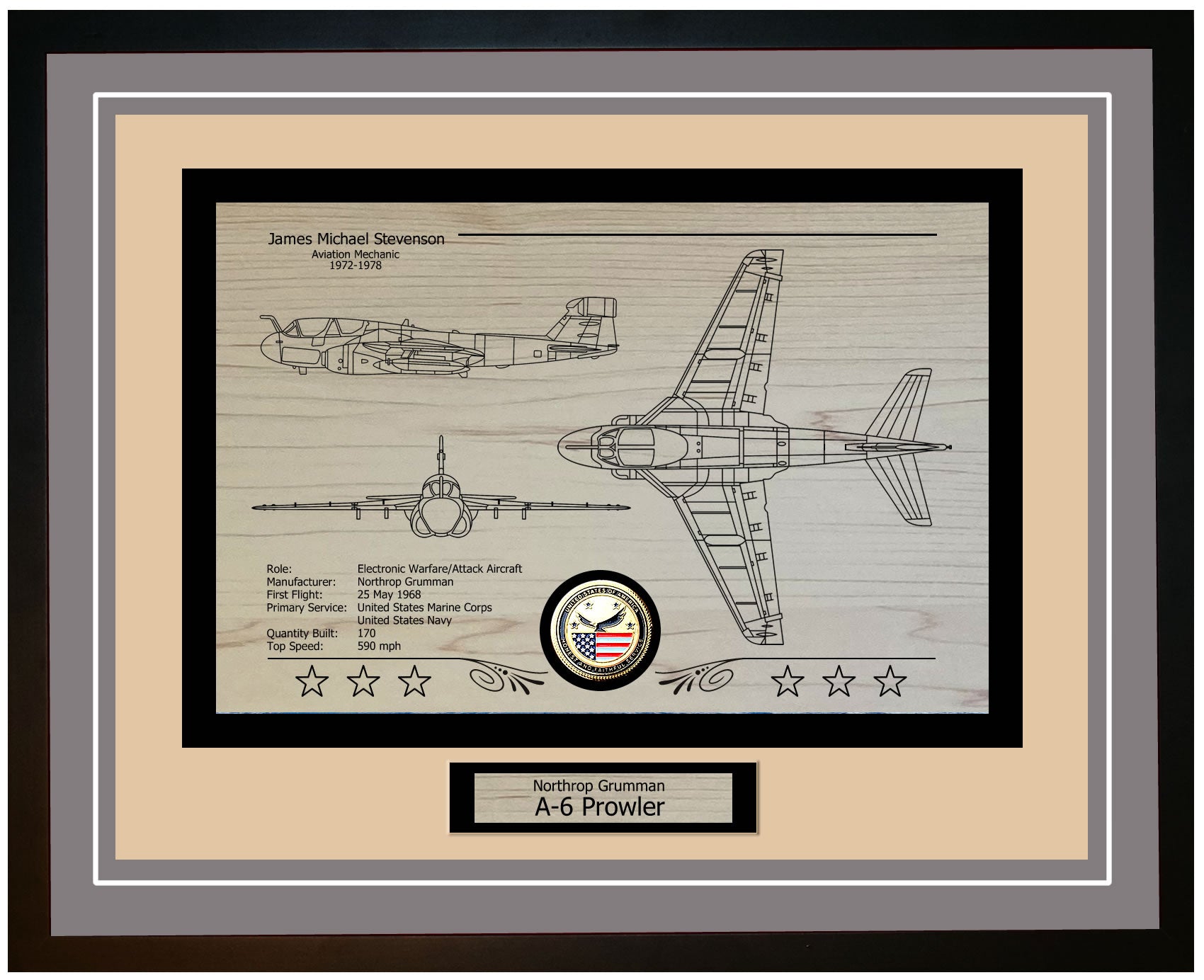
USS Buck DD-761 Ship Specifications
| Specification | Details |
|---|---|
| Class | Allen M Sumner Class Destroyer |
| Commissioned | June 28, 1946 |
| Displacement | 3,218 tons |
| Length | 376.5 feet |
| Beam | 40.7 feet |
| Draft | 14.2 feet |
| Speed | 36.5 knots |
| Complement | 345 |