
USS Racine LST-1191
The USS Racine (LST-1191) was a Newport-class tank landing ship built for the U.S. Navy. It was laid down on January 13, 1970, at the National Steel and Shipbuilding Company in San Diego, California. The ship launched on August 15, 1970, and was commissioned on July 9, 1971. This ship was part of a push to modernize the Navy's amphibious capabilities during the Cold War, ensuring the U.S. could project power and support ground operations worldwide.
Named after Racine, Wisconsin, the ship continued the tradition of naming tank landing ships after American cities and counties. Racine's rich industrial history made it a fitting namesake for a vessel designed to support military operations. The naming honored the city's legacy and its citizens' contributions to the nation's industrial and military efforts.
The USS Racine had some standout features. Its bow ramp and stern gate allowed for quick loading and unloading of vehicles, troops, and equipment directly onto shore, no port needed. It also had a helicopter deck, making it versatile for missions like amphibious assaults, humanitarian aid, and disaster relief. The Newport-class design included a unique bow thruster system, improving maneuverability in tight spots and during beach landings.
The USS Racine left a mark on the Navy with its participation in numerous operations and exercises, showcasing the strategic value of amphibious warfare. It played a crucial role in projecting American military power and providing logistical support in various conflicts and peacetime missions. Its service record highlights the adaptability and resilience of the Newport-class LSTs, designed to meet the evolving demands of modern warfare.
The Newport-class ships were built to replace the aging World War II-era LSTs. They were larger, faster, and more capable, focusing on increased payload capacity and improved seakeeping abilities. These vessels were designed to transport and deploy tanks, vehicles, cargo, and troops directly onto unimproved shores, supporting amphibious operations and ensuring rapid response capabilities.
Commissioned on July 9, 1971, the USS Racine quickly became a key part of the Navy's amphibious fleet. Throughout its service, the ship took part in numerous training exercises, joint operations with allied forces, and real-world missions, showcasing its versatility and readiness. The commissioning of the USS Racine marked the start of a distinguished career, significantly contributing to the Navy's amphibious warfare capabilities and overall mission readiness.
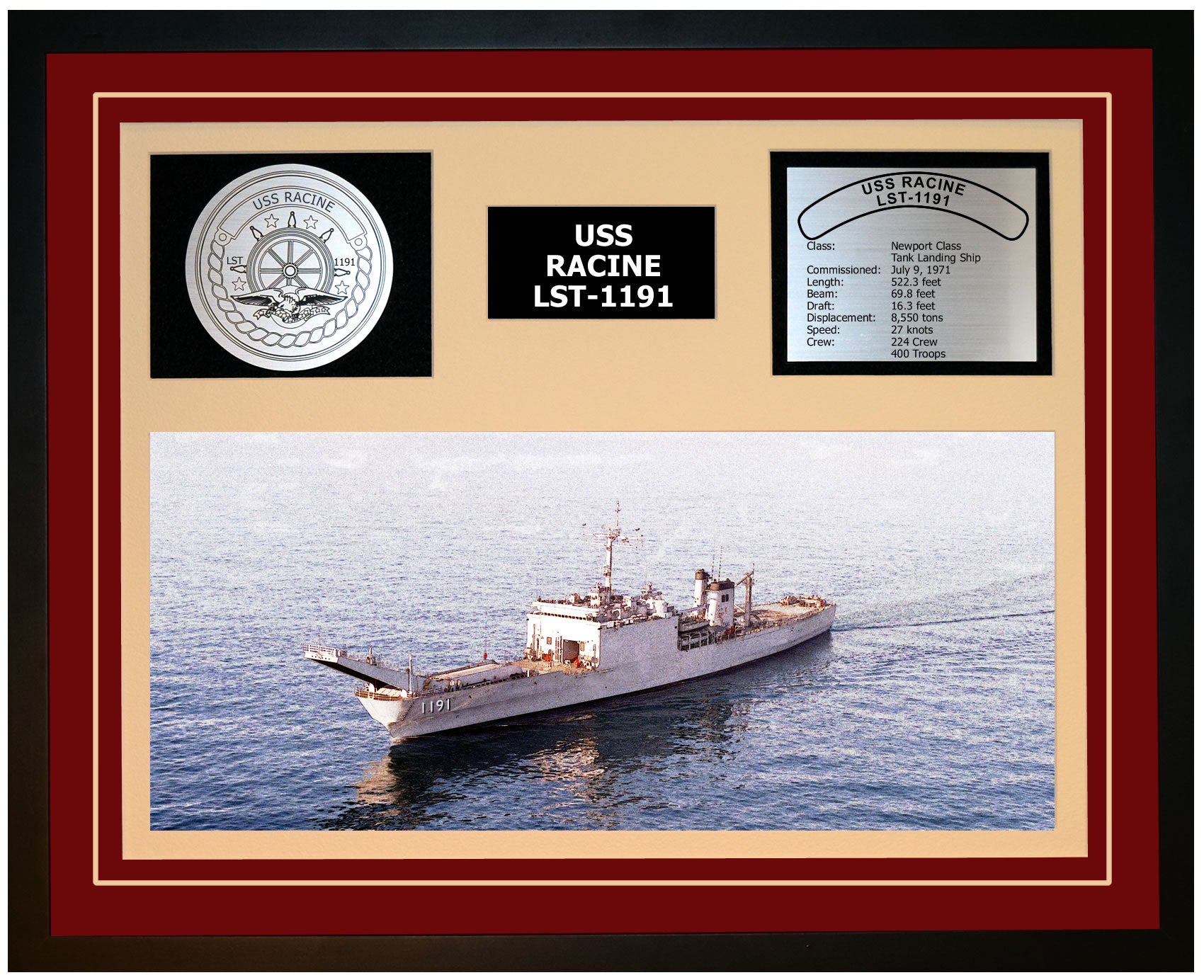
USS Racine LST-1191: Structure, Technology, Armament, and Weaponry
The USS Racine (LST-1191) was a Newport-class tank landing ship, part of a class known for its innovative design and enhanced capabilities. It had a displacement of about 8,450 tons when fully loaded, stretching 522 feet in length with a beam of 69 feet. Built with high-strength steel, it was tough and ready for all sorts of maritime conditions. The ship's design featured a bow ramp and a stern gate, making it much easier to load and unload vehicles and cargo directly onto shore. This was a big step up from older LST designs that needed more complicated offloading procedures.
The USS Racine was packed with cutting-edge navigation and communication systems for its time. It had advanced radar and sonar systems, crucial for navigation and spotting potential threats. Its communication suite included secure radio and satellite capabilities, ensuring it could stay in touch with other ships and command centers, even in remote or hostile areas. The ship was powered by six diesel engines, delivering a combined output of 16,000 horsepower, allowing it to reach a top speed of 20 knots. This propulsion system gave it impressive speed and maneuverability, essential for amphibious operations.
When it came to armament, the USS Racine was well-equipped to defend against both surface and aerial threats. It had two twin 3-inch/50 caliber gun mounts, effective against aircraft and smaller surface vessels. These were backed up by smaller caliber weapons, including .50 caliber machine guns. The ship also had provisions for mounting additional weapons as needed, offering flexibility based on mission requirements and threat assessments.
The ship's defensive systems were bolstered by its electronic warfare capabilities. It was equipped with electronic countermeasure (ECM) systems to detect and jam enemy radar and communication signals, reducing the chances of being successfully targeted. Additionally, its decoy launchers could deploy chaff and flares to mislead incoming missiles. These defensive measures, combined with its robust armament, made the USS Racine a formidable asset in both offensive and defensive operations, ready to support amphibious assaults, humanitarian missions, and a variety of other naval operations.

Crew Accounts of Time Aboard
The USS Racine (LST-1191) holds a treasure trove of memories for its former crew members, spanning decades of service and countless experiences. The guestbook posts from these veterans paint a vivid picture of life aboard the ship, from the camaraderie and adventures to the challenges and personal growth.
**Early Years and Plank Owners:** Several crew members, such as Michael Antosik and Greg Nugent, recall their time as "plank owners," the original crew who commissioned the ship. They fondly remember the South American cruise to Chile and Peru, a significant early voyage that left a lasting impression. George Clines, another plank owner, humorously recalls attending the first Captain's Mast and the lessons learned from his youthful indiscretions.
**Memorable Deployments:** The ship's deployments were diverse and impactful. Earl Scott Adams and Robert Barrow highlight the 50th Anniversary of the Marine's landing at Guadalcanal, a journey that honored the past and brought the crew closer together. David Droste and Ricky Sands also remember this South Pacific tour as a highlight of their service, filled with historical significance and personal growth.
**Camaraderie and Mentorship:** Many posts reflect the strong bonds formed aboard the Racine. John Adams credits IC1 Arnold Wessels for teaching him the ropes as an Interior Communications-Electrician, while Stephen Adams reminisces about his first Thanksgiving on the ship, taken in by a kind-hearted DCC. The sense of mentorship and camaraderie is a recurring theme, with crew members like Jim Boerner and Steve Ezzell recalling the guidance and friendships that shaped their naval careers.
**Port Visits and Adventures:** The Racine's port visits were a source of excitement and adventure. Milt Bagan and Bob Bowers recount trips to Long Beach, Victoria, Honduras, Panama, Acapulco, and Mazatlan, among others. These stops provided opportunities for exploration and bonding, creating memories that have lasted a lifetime. Ronald Borunda and his friends partied in Los Angeles, while Bob Goodrich fondly remembers the parties on the mesa and in Australia.
**Challenges and Hardships:** Not all memories were rosy. Jim Alvarez describes his time on the Racine as the worst command of his career, despite trips to Hawaii, Portland, and Vancouver. Others, like Daniel Decker, recall specific incidents such as the forward troop space filling with water, highlighting the challenges and unexpected events that tested the crew's resilience.
**Personal Growth and Reflections:** For many, their time on the Racine was a period of significant personal growth. Jeff Barnett reflects on his rebellious nature and the lessons learned, while Tony McInvale acknowledges the impact of his service on his later life. The ship provided a backdrop for young sailors to mature and develop skills that would serve them well in their future endeavors.
**Lasting Connections:** The guestbook posts also reveal a desire to reconnect with old shipmates. Crew members like Joe Beckham and Jim Greenman express a longing to hear from those they served with, underscoring the deep connections formed during their time on the Racine. The shared experiences, both good and bad, created bonds that have endured long after their service ended.
**Unique Experiences:** Some posts highlight unique and memorable experiences. Fred Cook recalls reporting his division officer for lying, leading to significant changes in the electronics gang. Tom Gardner proudly mentions his appearance on "Jeopardy!" wearing a Navy Blue tie with the inscription "Don't Give Up The Ship," a nod to his naval service.
**Legacy and Impact:** The legacy of the USS Racine is evident in the pride and fondness expressed by its former crew members. From the plank owners who commissioned the ship to those who served in its final years, the Racine left an indelible mark on their lives. The ship's decommissioning and eventual sinking during RIMPAC 2018 are noted with a sense of nostalgia and respect for the vessel that played such a significant role in their naval careers.
In summary, the memories shared by the crew members of the USS Racine (LST-1191) reflect a rich tapestry of experiences, from the excitement of port visits and the challenges of naval life to the deep bonds of friendship and mentorship. These posts offer a glimpse into the lives of those who served aboard the Racine, highlighting the ship's enduring legacy and the lasting impact it had on its crew.
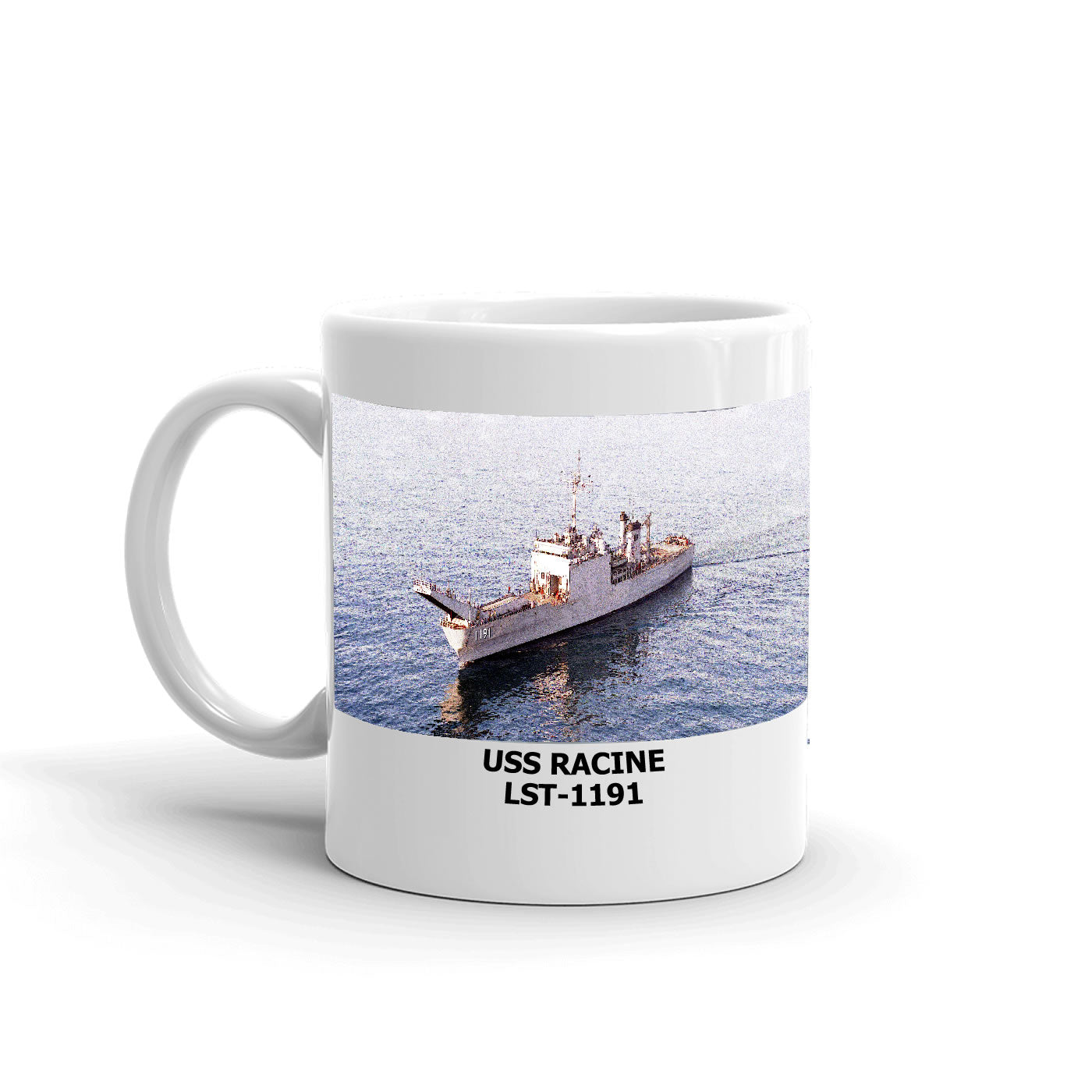
USS Racine LST-1191: Upgrades, Mission Capabilities, and Contribution to the Fleet
The USS Racine (LST-1191) was a remarkable ship in the U.S. Navy's amphibious warfare fleet. Commissioned in 1971, it was part of the Newport-class tank landing ships, designed to be a step up from their World War II predecessors. Over the years, the Racine got some impressive upgrades. It had the AN/SPS-10 surface search radar installed, boosting its navigation and situational awareness. Communication systems were also improved, making it easier to coordinate with other naval units. These changes kept the Racine ready for its missions in a fast-changing world.
The Racine was built for versatility. As a tank landing ship, its main job was to transport and deploy tanks, vehicles, and troops right onto enemy shores. With a bow ramp and stern gate, it could load and unload quickly, which was crucial during amphibious assaults. But that wasn't all. The Racine was also a key player in humanitarian missions, disaster relief, and evacuations. It could operate in shallow waters and deliver supplies and people to places with limited port facilities, making it invaluable in both combat and crisis situations.
During the Cold War, the Racine was a significant asset. It took part in many exercises and operations, sometimes on its own and sometimes with larger task forces. One standout moment was its role in Operation Frequent Wind in 1975, the final phase of evacuating Americans and "at-risk" Vietnamese from Saigon. This operation showed just how versatile and ready the Racine was for unexpected challenges. Throughout its service, the Racine proved the critical role of amphibious ships in projecting power and supporting the Navy's global reach.
The Racine also helped build international partnerships. It often joined joint exercises with NATO and other allies, enhancing multinational amphibious operations. These exercises improved tactical skills and strengthened diplomatic ties. The Racine's ability to fit seamlessly into these efforts highlighted the strategic value of the Newport-class LSTs and the importance of a strong, adaptable amphibious fleet.

USS Racine LST-1191: Deployments, Role in Major Conflicts, Awards, and Commendations
The USS Racine (LST-1191) was a Newport-class tank landing ship that served with distinction in the U.S. Navy. Commissioned on 9 July 1971, Racine was built to transport and deploy troops, vehicles, and equipment directly onto shore, bypassing the need for port facilities. This made it a key player in many amphibious operations and exercises. Early on, Racine was busy in the Pacific and Indian Oceans, working alongside allied navies to boost readiness and cooperation.
Racine's service record is impressive. While it didn't see action in the Vietnam War, it was involved in the Gulf War. During the Gulf War in 1990-1991, Racine was part of the naval buildup in the Persian Gulf, supporting Operation Desert Storm. Its design allowed it to handle amphibious assaults and provide logistical support in challenging environments.
Throughout its nearly three decades of service, Racine earned several awards and commendations. It received the Navy Unit Commendation, the Meritorious Unit Commendation, and multiple Battle Efficiency (E) Awards. These honors recognized the ship's outstanding performance and readiness. Racine also earned campaign medals for its participation in the Gulf War, highlighting its contributions to U.S. military efforts.
Beyond combat, Racine took part in humanitarian missions and peacetime exercises. It was involved in disaster relief, providing aid to regions hit by natural disasters. These missions showcased the ship's versatility and the humanitarian side of the Navy's amphibious forces. Racine also participated in multinational exercises like RIMPAC, promoting international cooperation and demonstrating its capabilities to allies and potential adversaries. The legacy of USS Racine (LST-1191) is one of dedicated service, adaptability, and excellence, embodying the mission and values of the U.S. Navy.
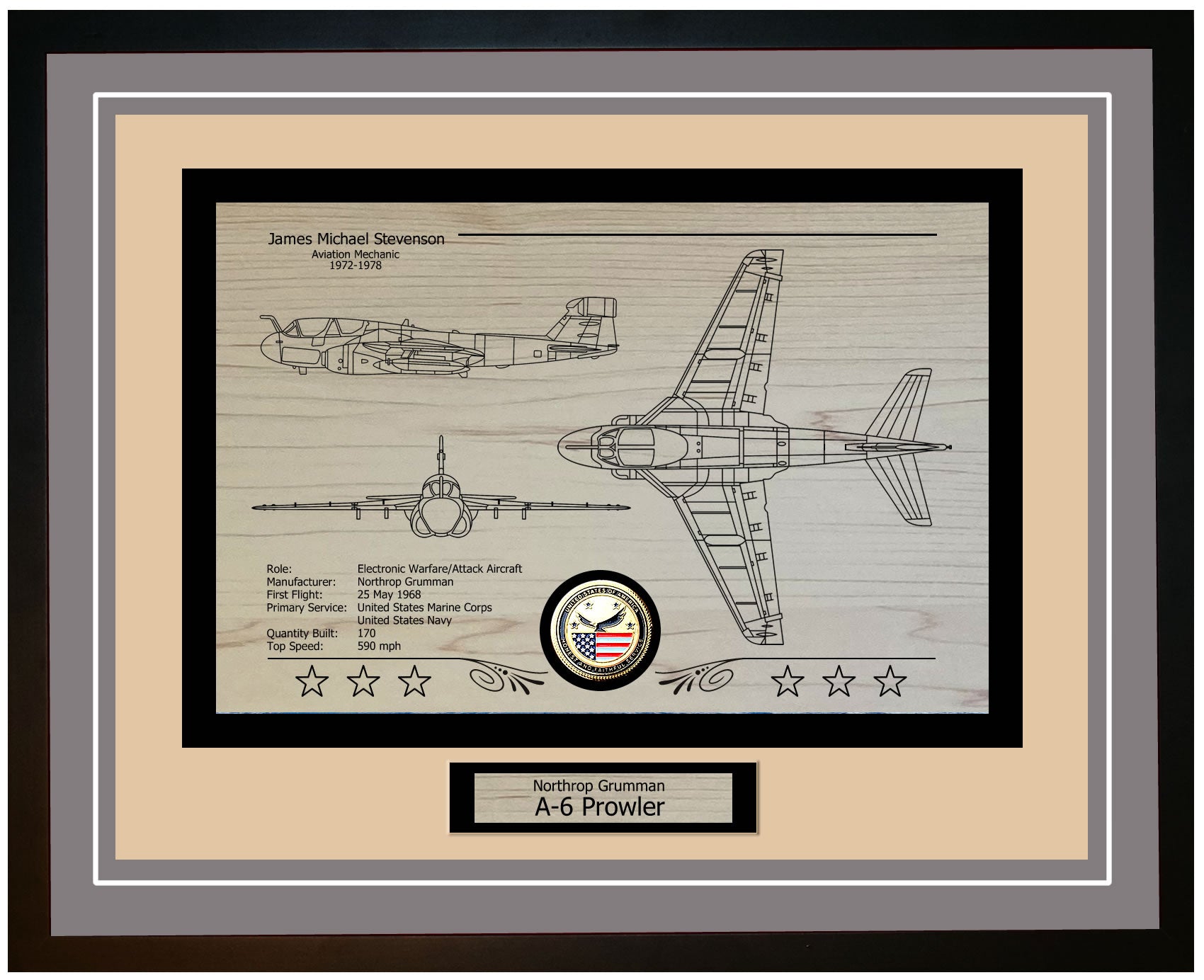
USS Racine LST-1191 Ship Specifications
| Specification | Details |
|---|---|
| Class | Newport Class Tank Landing Ship |
| Commissioned | July 9, 1971 |
| Displacement | 8,550 tons |
| Length | 522.3 feet |
| Beam | 69.8 feet |
| Draft | 16.3 feet |
| Speed | 27 knots |
| Complement | 224 Crew 400 Troops |