
USS Wadsworth FFG-9
The USS Wadsworth (FFG-9) was a guided-missile frigate, part of the Oliver Hazard Perry class. These ships were built for multi-mission capabilities, tackling threats from the air, surface, and underwater. The keel of the Wadsworth was laid on July 13, 1977, at Todd Pacific Shipyards in San Pedro, California. It launched on July 29, 1978, and joined the Navy on February 28, 1980. This was during the Cold War, a time when the Navy was modernizing to stay ahead with a versatile and advanced fleet.
The ship was named after Commodore Alexander Scammel Wadsworth, a notable Navy officer from the early 19th century. He made his mark during the War of 1812, serving as the first lieutenant on the USS Constitution, known as "Old Ironsides." His leadership and bravery in battle earned him a spot in naval history, and the USS Wadsworth was named to honor his contributions.
The Wadsworth was packed with advanced weaponry and sensors. It had a Mk 13 missile launcher for Standard surface-to-air and Harpoon anti-ship missiles. The ship also boasted a 76mm OTO Melara gun, torpedo tubes, and a Phalanx Close-In Weapon System (CIWS) for defense. Plus, it had a flight deck and hangar for two SH-60 Seahawk helicopters, boosting its anti-submarine and surface warfare capabilities.
The USS Wadsworth left a legacy of versatility and reliability. It took part in many missions and operations, from the Persian Gulf to the Mediterranean Sea and the Pacific Ocean. The ship was crucial in maritime security, search and rescue, and humanitarian missions, showcasing the adaptability of the Oliver Hazard Perry-class frigates.
The Oliver Hazard Perry class was designed in the 1970s to be cost-effective yet capable. These frigates protected convoys, conducted anti-submarine warfare, and provided air defense for naval task forces. Named after Commodore Oliver Hazard Perry, another War of 1812 hero, the class was known for its modular design, allowing easy upgrades and maintenance.
The commissioning of the USS Wadsworth was a big deal, marking the start of a career that lasted over two decades. The ceremony was attended by naval officers, dignitaries, and the crew's families. As it joined the Navy's surface fleet, the Wadsworth was ready for a range of missions, supporting national defense and international maritime security. Its commissioning highlighted the Navy's commitment to a strong, capable fleet, ready for modern maritime challenges.
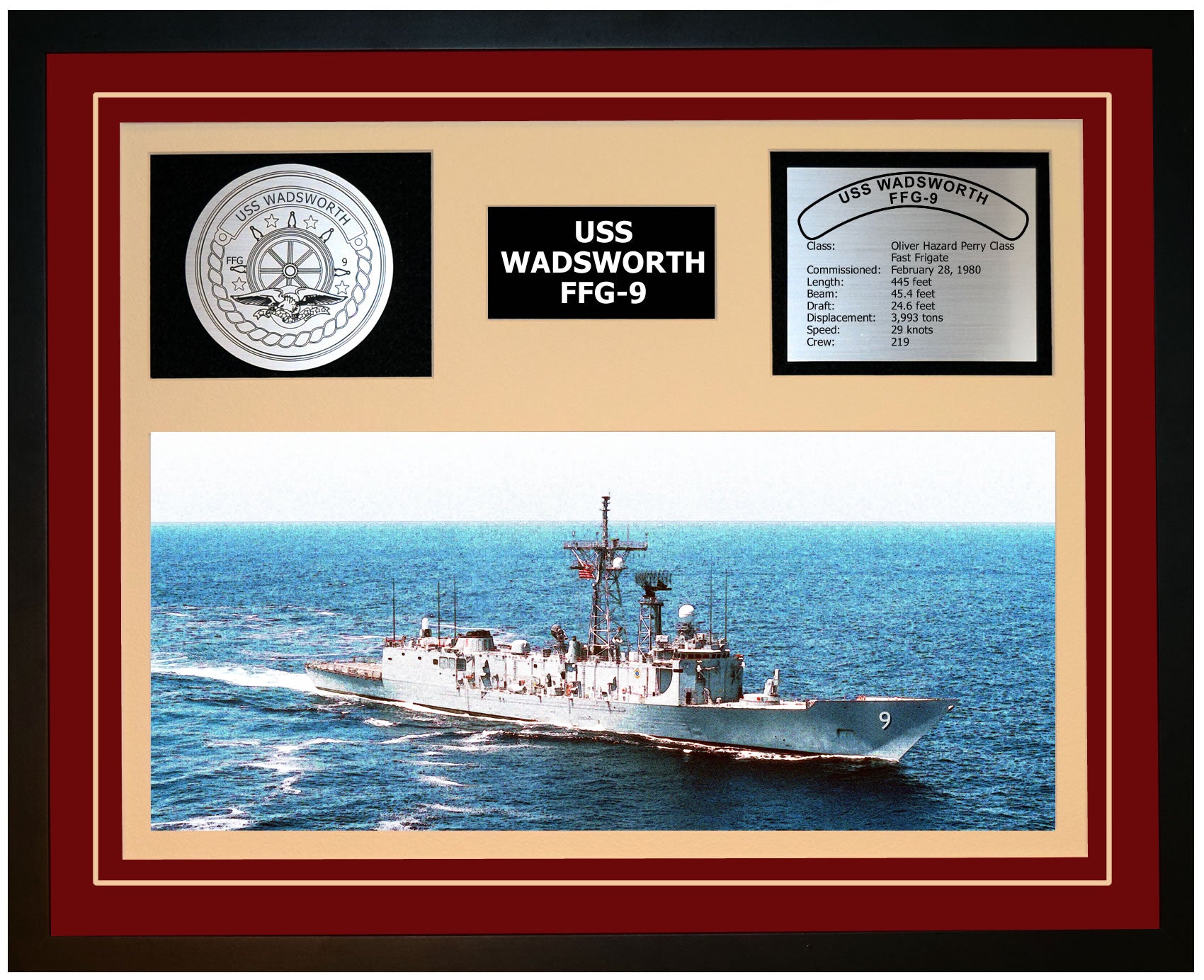
USS Wadsworth FFG-9: Structure, Technology, Armament, and Weaponry
The USS Wadsworth (FFG-9) is a standout among the Oliver Hazard Perry-class frigates, known for their solid and adaptable design. This ship's sleek hull isn't just for looks; it boosts speed and agility, crucial for naval maneuvers. Built with high-strength steel, the hull is tough enough to handle the ocean's challenges. The aluminum superstructure keeps the ship light and houses the command centers and radar systems. Wadsworth's design focuses on functionality and survival, with features that help it bounce back from battle damage.
Tech-wise, the USS Wadsworth is packed with advanced systems for various missions. It runs on two General Electric LM2500 gas turbines, cranking out 41,000 shaft horsepower, letting it zip along at over 29 knots. The ship's AN/SPS-49 air search radar and AN/SPS-55 surface search radar keep it aware of its surroundings. For anti-submarine warfare, it has the AN/SQQ-89(V) sonar suite, with both hull-mounted and towed array sonar systems. These technologies help the Wadsworth detect, track, and engage threats effectively.
When it comes to firepower, the USS Wadsworth is ready for anything. Its main weapon is the Mk 13 Mod 4 missile launcher, which fires RIM-66 Standard surface-to-air missiles and RGM-84 Harpoon anti-ship missiles. This lets the ship tackle both air and surface threats from afar. For close encounters, it has a Mk 75 76mm naval gun, perfect for taking on surface targets, aircraft, and incoming missiles. Plus, the ship's two Mk 32 triple torpedo tubes can launch Mk 46 torpedoes for anti-submarine warfare. This arsenal ensures the Wadsworth is prepared for any combat situation.
The ship's defenses are just as impressive. The AN/SLQ-32(V)2 electronic warfare suite helps the Wadsworth detect and counter radar and missile threats. It can jam enemy systems and deploy chaff and flares to mislead incoming missiles. The Mk 36 SRBOC system launches decoys to confuse enemy missiles. With these defensive tools and its strong offensive capabilities, the USS Wadsworth is a versatile and formidable presence in any threat environment.

Crew Accounts of Time Aboard
The USS Wadsworth (FFG-9) holds a special place in the hearts of its former crew members, as evidenced by the numerous guestbook posts that recount their experiences and memories aboard the ship. These posts span from the ship's commissioning in 1979 to its decommissioning, capturing a wide array of personal stories and reflections.
**Early Years and Plankowners:** Several crew members who served during the ship's early years, including its commissioning, fondly recall their time as "plankowners." Charles McGathey, who served as a CPO in 1979, and Thomas Brown, who joined as a GMG1 and later became an ENS, both highlight the pride and camaraderie of the initial crew. Dale Callaway, a retired STG1, and Vern Capistran, the first 'doc' on the ship, also share their positive experiences, emphasizing the strong bonds formed during the ship's early days.
**Memorable Deployments and Adventures:** The ship's various deployments and cruises are a recurring theme in the guestbook entries. Tj.peewee Aquaro, who served as an RM2 in 1983, reminisces about a world cruise that included stops in Australia, New Zealand, and Hong Kong. Michael Ballenger, an OS2 in 1985, recalls the Vancouver Canada EXPO and the Portland Rose Festival. Darryl Barnes, an EN3 in 1984, and Phillip Galey, a plankowner STG1, both mention the excitement of WestPac deployments, with Galey specifically noting visits to Japan, Korea, Hong Kong, and the Philippines.
**Life-Changing Experiences:** Many crew members reflect on how their time aboard the USS Wadsworth shaped their lives and careers. Brooke Allen, who served as a LTJG in 1998, describes the Navy as an adventure and now homeschools her children while writing under a pen name. Michael Barney, an RM2 in 1991, transitioned to a career in urban planning in Portland, OR. Kevin Beck, an MS1 in 1986, became a federal law enforcement officer after his Navy service. These stories highlight the lasting impact of their naval experiences.
**Friendships and Camaraderie:** The strong sense of camaraderie among the crew is a common thread throughout the posts. Leroy Beavers, an E-6/SH1 in 2001, describes the USS Wadsworth as the best ship he ever served on, emphasizing the team's pride and unity. Darryl Barnes and Kevin Ransom, both serving in the mid-1980s, recall the close friendships and good times they shared with their shipmates. Eric Culpepper, a GMG3 in 1983, and Chris Rubright, an EN1/ENC in 1995, also express their fondness for the crew and the lasting connections they made.
**Challenges and Hard Work:** While many posts highlight the positive aspects of their service, some crew members also acknowledge the challenges they faced. Travis Donnell, an HT2 in 1988, mentions the hard work but also the good times he experienced. Todd Fultz, a GSM2 in 1987, reflects on the tough transition to a new ship after leaving the USS Wadsworth. These accounts provide a balanced view of life aboard the ship, recognizing both the difficulties and the rewards.
**Nostalgia and Reflection:** As the years have passed, many former crew members look back on their time aboard the USS Wadsworth with nostalgia. Matt Bigogno, an OSSN in 1981, describes it as the most exciting time of his life. Sean Bengsch, a DC2 in 1994, cherishes the plaque he received from the engineering department as a reminder of the good times. Bryan Welch, an ET3 in 1994, credits the ship and its crew for his decision to reenlist and make a career in the Navy.
**Reunions and Connections:** The guestbook posts also serve as a platform for former crew members to reconnect and seek out old friends. Anthony Boddie, a YNSN/SKSN in 1990, and Eric Shannon, an EW3 in 1990, both express a desire to catch up with their shipmates. Gerald Cupps, an RM2 in 1991, and Michael Sipe, an RM2 in 1988, also reach out to their former colleagues, highlighting the enduring bonds formed during their service.
In summary, the memories shared by the crew members of the USS Wadsworth (FFG-9) paint a vivid picture of life aboard the ship. From the early days of commissioning to the various deployments and adventures, the camaraderie, challenges, and life-changing experiences have left a lasting impact on those who served. The guestbook posts reflect a deep sense of pride, nostalgia, and a desire to reconnect with old friends, underscoring the unique and enduring legacy of the USS Wadsworth.

USS Wadsworth FFG-9: Upgrades, Mission Capabilities, and Contribution to the Fleet
The USS Wadsworth (FFG-9) was an Oliver Hazard Perry-class guided-missile frigate that saw some impressive upgrades during its service. Commissioned in 1980, it started with the AN/SPS-49 air search radar, AN/SQS-56 sonar, and the Mk 13 missile launcher. These systems gave it a solid foundation for tackling air, surface, and submarine threats. Over time, the Wadsworth got even better with the Mk 92 Fire Control System, boosting its targeting precision. Its electronic warfare suite was also upgraded with the AN/SLQ-32(V)2 system, enhancing its ability to detect and counter threats.
The Wadsworth was built for versatility. Originally focused on anti-submarine warfare (ASW) during the Cold War, it carried torpedoes and the SH-60 Seahawk helicopter, extending its reach. For surface warfare (SUW), it had Harpoon anti-ship missiles and a 76mm OTO Melara gun, making it a tough adversary. Its anti-air warfare (AAW) capabilities were strengthened with the Standard Missile (SM-1), providing solid aerial defense. These features allowed the Wadsworth to handle a variety of missions, from convoy escort and carrier group protection to maritime interdiction and humanitarian aid.
The USS Wadsworth made significant contributions to the fleet, showcasing its versatility and reliability. It participated in numerous deployments and exercises, both solo and as part of larger task forces. During the Iran-Iraq War, it played a key role in Operation Earnest Will, escorting reflagged Kuwaiti oil tankers through the dangerous Persian Gulf. The Wadsworth also engaged in counter-narcotics operations in the Caribbean and Eastern Pacific, working with U.S. and allied forces to disrupt drug trafficking. It took part in multinational exercises like RIMPAC and UNITAS, enhancing cooperation among allied navies.
The USS Wadsworth (FFG-9) was a testament to the adaptability and resilience of the Oliver Hazard Perry-class frigates. With its upgrades, it maintained a technological edge and operational effectiveness, ready to face modern naval challenges. Its mission capabilities covered the full range of naval operations, from anti-submarine and anti-surface warfare to air defense and maritime security. The Wadsworth's service was marked by its involvement in critical operations and exercises, highlighting its role as a versatile and dependable asset in the U.S. Navy.

USS Wadsworth FFG-9: Deployments, Role in Major Conflicts, Awards, and Commendations
The USS Wadsworth (FFG-9) had a remarkable service record, marked by deployments all over the world. Commissioned in 1980, this Oliver Hazard Perry-class guided-missile frigate was a key player in various operations, reflecting the ever-changing nature of U.S. naval strategy during the late 20th and early 21st centuries. The ship's missions took it across the Atlantic and Pacific Oceans, the Mediterranean Sea, and the Persian Gulf. This versatility showed just how much the Navy relied on frigates like the Wadsworth for a wide range of tasks. It also took part in several multinational exercises, boosting teamwork with allied navies and contributing to global maritime security.
During its service, the USS Wadsworth was involved in major conflicts, especially in the Middle East. It played a role in Operation Earnest Will, the U.S. mission to protect Kuwaiti oil tankers during the Iran-Iraq War in the late 1980s. This operation was crucial for keeping oil flowing through the Persian Gulf amid rising tensions. The Wadsworth also participated in Operation Desert Storm in 1991, providing vital support in liberating Kuwait from Iraqi occupation. Its advanced radar and missile systems were key in maintaining air and sea superiority, highlighting its strategic importance in modern naval warfare.
The USS Wadsworth's outstanding service didn't go unnoticed. Throughout its operational life, the ship received numerous awards and commendations, reflecting the crew's dedication and the vessel's operational excellence. Among these accolades were the Navy Unit Commendation and the Meritorious Unit Commendation, both highlighting the ship's exceptional performance during critical missions. The Wadsworth also earned multiple Battle Efficiency "E" awards, signifying its superior readiness and combat efficiency compared to other ships in its class. These honors were a testament to the ship's consistent ability to meet and exceed the rigorous demands of naval operations.
Beyond its combat and operational achievements, the USS Wadsworth was also recognized for its humanitarian efforts. The ship took part in several disaster relief missions, providing aid and support to regions hit by natural disasters. These missions showcased the versatility and humanitarian commitment of the U.S. Navy, with the Wadsworth serving as a beacon of hope and assistance in times of crisis. The ship's legacy is thus not only defined by its combat prowess but also by its contributions to global peace and stability, embodying the multifaceted role of modern naval forces.
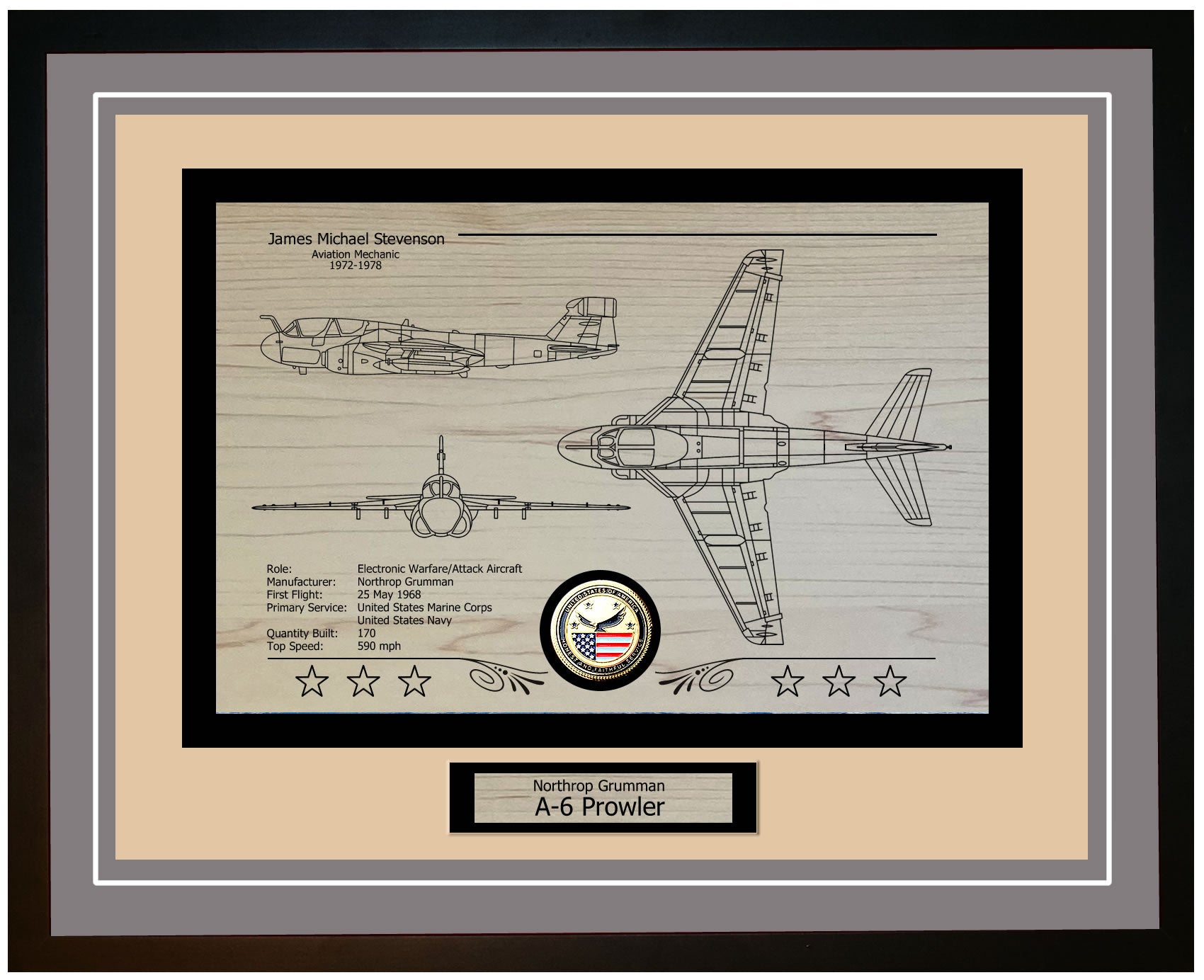
USS Wadsworth FFG-9 Ship Specifications
| Specification | Details |
|---|---|
| Class | Oliver Hazard Perry Class Guided Missile Frigate |
| Commissioned | February 28, 1980 |
| Displacement | 3,993 tons |
| Length | 445 feet |
| Beam | 45.4 feet |
| Draft | 24.6 feet |
| Speed | 29 knots |
| Complement | 219 |